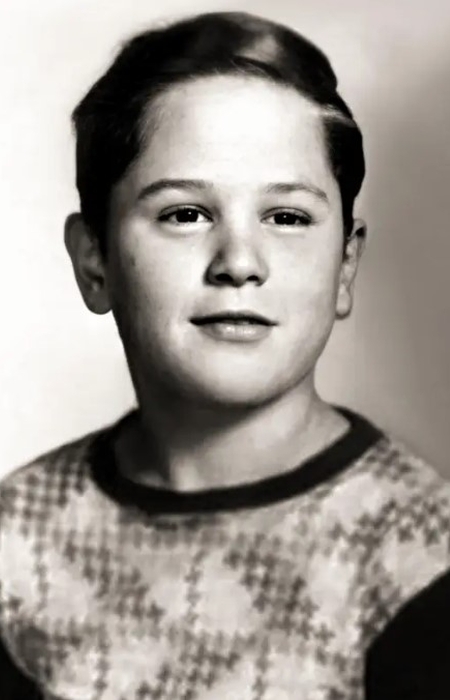
Robert De Niro was once just a quiet boy with big eyes and a soft voice, wandering the streets of New York, far removed from the fierce screen presence he would later become. Long before the world knew him as the intense force in Taxi Driver or the volatile figure in Raging Bull, he was known simply as “Bobby Milk”—a nickname that neighborhood kids gave him because of his pale skin and shy demeanor. There was nothing yet in his manner to suggest the firestorm of talent that would one day define a generation of film.
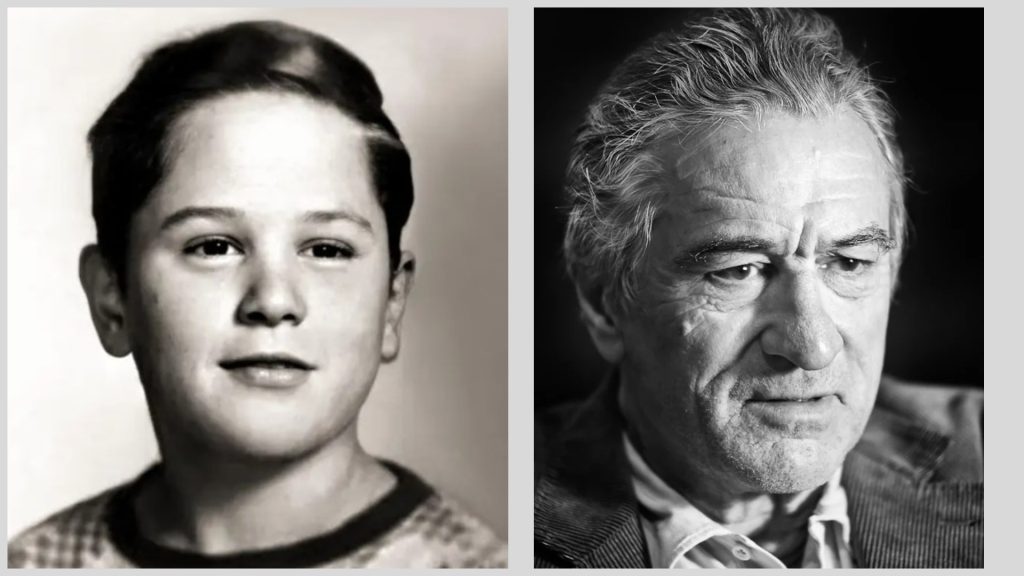
His early life was anything but glamorous. De Niro was born into an artistic, unconventional family—his father was a painter, and his mother was a poet. They separated when he was just two years old. He was raised mostly by his mother in Manhattan’s Greenwich Village, surrounded by writers, dancers, painters, and thinkers. It was a bohemian world of dreamers and outsiders, and while it nurtured his sensitivity, it also left him uncertain of where he fit in. Acting would become his compass.
At the age of ten, young Bobby stepped onstage for the first time, playing the Cowardly Lion in a school production of The Wizard of Oz. Despite being painfully shy, something changed the moment he began to perform. It was as though he had discovered his true skin. The timid boy disappeared, and in his place stood a confident, expressive child, alive in a way he never had been before. That single experience lit a spark that would grow into a blazing fire across decades of cinema.
As he entered his teenage years, De Niro drifted from the gentle world of art into the rougher streets of Little Italy. He wasn’t a troublemaker, but he absorbed the rhythms, body language, and street wisdom of the neighborhood. He listened more than he spoke. He watched, studied, and internalized. The subtle gestures and sharp glances of streetwise men would one day inform his legendary portrayals of mobsters and hardened characters—not because he was one of them, but because he understood them deeply.
The true turning point in De Niro’s life came when he met a young director named Martin Scorsese. The two bonded instantly, and what followed was one of the most iconic collaborations in cinematic history. Together, they created films that would go on to shape American cinema: Mean Streets, Taxi Driver, Raging Bull, Goodfellas, Casino, The Irishman, and many more. These were not just movies—they were emotional storms, powered by De Niro’s unrelenting commitment to craft.
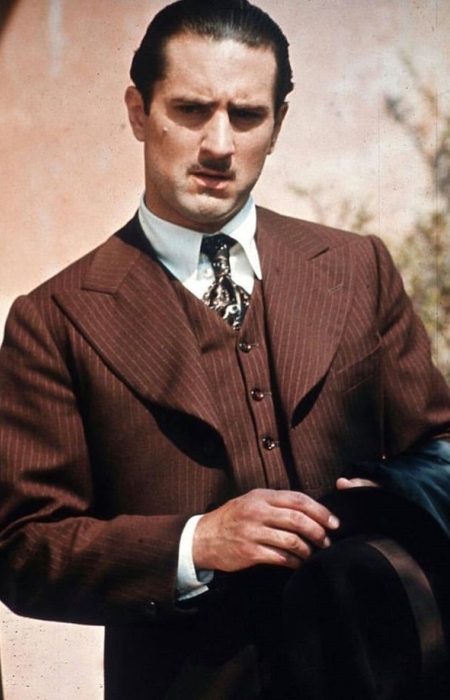
Known for his extreme dedication to method acting, De Niro pushed himself further than most would dare. For The Godfather Part II, he spent months in Sicily to learn the local dialect. Before filming Taxi Driver, he obtained a real cab driver’s license and worked the streets of New York for weeks, blending into the city he would later portray so hauntingly. For Raging Bull, he gained 60 pounds to play the older Jake LaMotta, transforming not just his body but his entire being.
Yet off-camera, De Niro was remarkably gentle. Friends often describe him as quiet, loyal, and deeply thoughtful—the complete opposite of the violent or unhinged characters he so often played. There was a warmth to him, a depth that never sought the spotlight. He wasn’t chasing fame; he was chasing truth.
After the tragedy of 9/11, De Niro chose to give back to the city that raised him. He co-founded the Tribeca Film Festival, not just as a celebration of film, but as a way to help revitalize Lower Manhattan. He expanded his influence beyond acting, becoming a producer, director, and entrepreneur, all while remaining fiercely committed to telling stories that matter.
In an era where celebrity often shouts, De Niro stood apart by letting his work speak for itself. He wasn’t interested in fame for fame’s sake. Instead, he built a legacy based on discipline, nuance, and the relentless pursuit of emotional honesty. His characters weren’t caricatures; they were layered, flawed, human.
To this day, Robert De Niro remains one of the most respected actors in the world, not because he courted attention, but because he earned it—quietly, fiercely, and without compromise. He didn’t need to be loud to be powerful. He let the silences speak, the glances linger, the pain simmer beneath the surface.
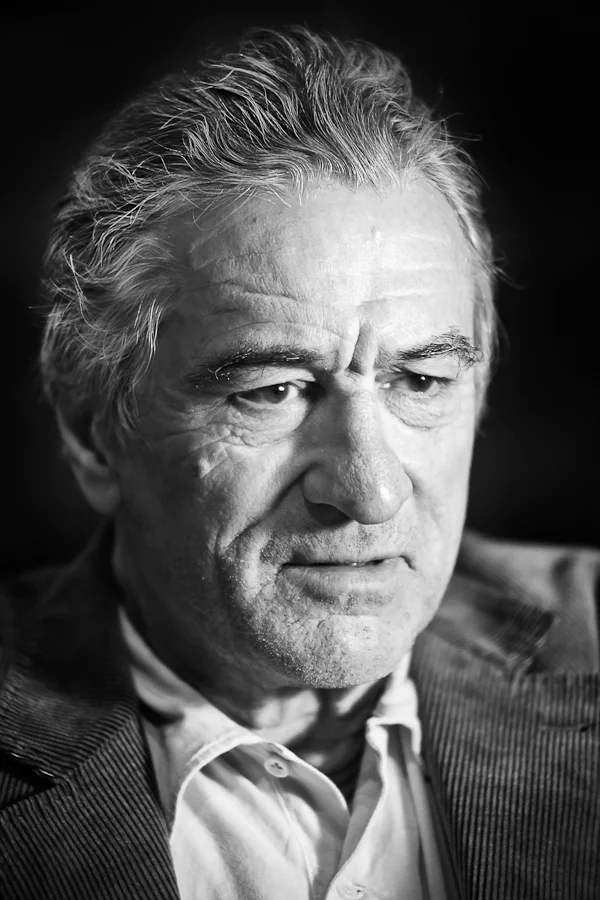
The journey from “Bobby Milk” to one of Hollywood’s greatest chameleons is more than just a story of success. It’s a testament to what happens when someone dares to dig deep, stay true, and keep going—no matter how long the road or how heavy the burden.
In the end, Robert De Niro’s story reminds us that brilliance isn’t always flashy. Sometimes, it’s found in the quiet determination of a boy who didn’t quite fit in—until he stepped into a role and found himself.