For Jeremy Meeks, what started as just another mugshot turned into the single moment that would completely change the course of his life. Born on February 7, 1984, Meeks faced hardship from the very beginning. His childhood was steeped in pain, instability, and adversity. He entered the world already addicted to heroin—both of his parents were addicts—and that reality shaped much of his early years. In a 2019 interview on the podcast What’s Your Water, Meeks spoke with raw honesty about his upbringing. He recounted a tragic event that occurred when he was only nine months old—his father took the life of his mother’s best friend. That act of violence shattered their family and left behind an atmosphere of chaos, fear, and confusion that shadowed Jeremy’s early life.
Growing up, he endured more than any child should. Home was not a place of peace but one of constant turmoil. Poverty, addiction, and abuse became the background noise of his youth. Like many who grow up surrounded by instability, Jeremy drifted toward trouble. His first encounters with the law were minor—curfew violations and skipping school. But small missteps soon evolved into more serious trouble. By the time he was in tenth grade, he had already left home, searching for independence but also stumbling into a darker path. Just two months after his eighteenth birthday, he was arrested for motor theft, a decision that would set off a long string of legal problems.
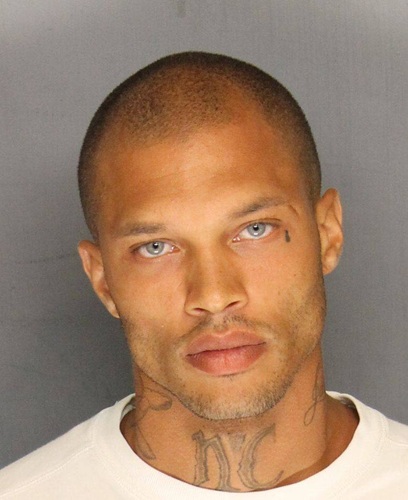
As the years passed, Meeks’ criminal record expanded—grand theft, forgery, and other felonies. He seemed trapped in a cycle of poor choices and bad circumstances. Then came 2014—the year that would alter everything. Arrested again, this time on weapons charges, Meeks was booked by the Stockton Police Department. His mugshot, a photo like millions of others taken every day, was uploaded to Facebook. But this one—his—caught fire like none before it.
Within hours, his image exploded across social media. The reason wasn’t his crime but his striking looks. With piercing blue eyes, high cheekbones, and a sharply defined jawline, Meeks’ appearance stood out against the grim backdrop of the booking photo. The picture went viral almost instantly, gathering over 15,000 likes and thousands of comments within a single day. Women flooded the post with messages calling him “the world’s hottest felon.” News outlets around the globe picked up the story. The image, originally meant to document a moment of failure, became an unexpected ticket to fame.
Joe Silva, spokesperson for the Stockton Police Department, later confirmed that Meeks’ photo became the most interacted-with post on their Facebook page since its creation. In the blink of an eye, Jeremy Meeks—once known only to local law enforcement—was suddenly a household name.
Despite the media frenzy, his reality was far from glamorous. Meeks served a 27-month prison sentence after his 2014 arrest. But prison also became a turning point. Behind bars, he had time to reflect. He began to ask himself who he wanted to be when he got out—and whether he was capable of real change. When he was released in 2016, the fashion world had not forgotten him. Modeling agencies reached out, eager to turn his viral notoriety into a professional career.
Meeks soon signed with White Cross Management, signaling the start of a new chapter. In an interview with ABC News, he said, “I’m in a position now to support my family and truly change my life.” And he meant it. Using his unique story and natural charisma, he turned an internet sensation into a legitimate modeling career.
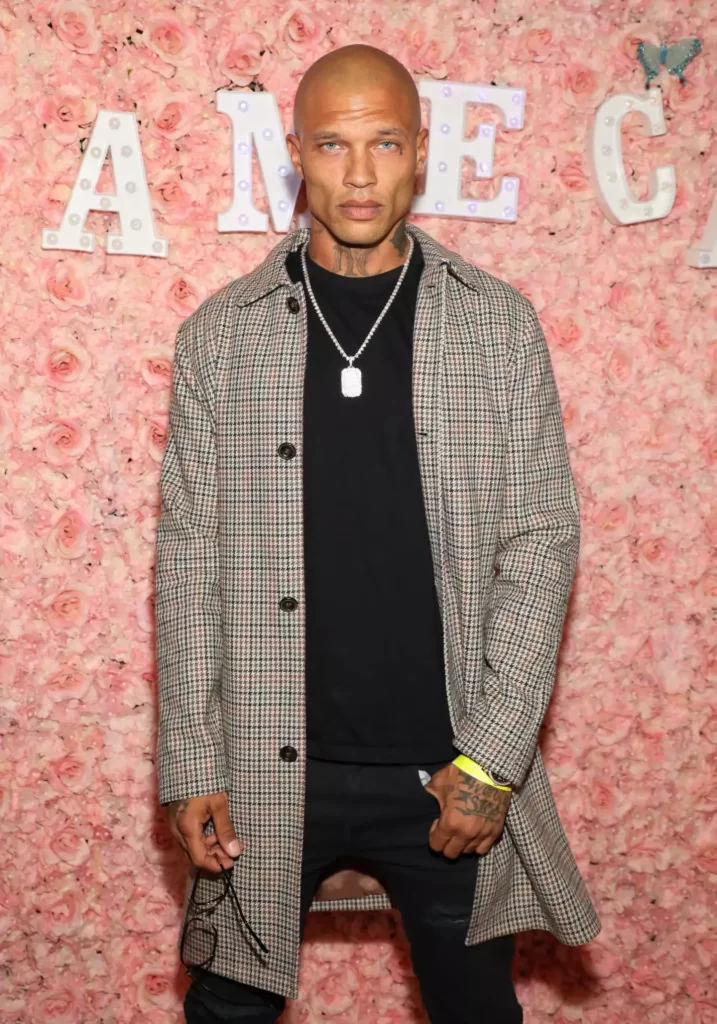
Over the next few years, Jeremy’s rise was meteoric. He walked the runway for prestigious brands like Philipp Plein and Tommy Hilfiger, appearing at New York Fashion Week and the glimmering runways of Paris. His transformation from inmate to model became one of the most talked-about redemption stories of the decade.
But Jeremy didn’t stop there. Determined to expand his talents, he ventured into acting, appearing in films such as Secret Society, Trigger, and True to the Game 2 and 3. His work on screen proved that his success wasn’t a fluke—he had the drive and dedication to reinvent himself completely.
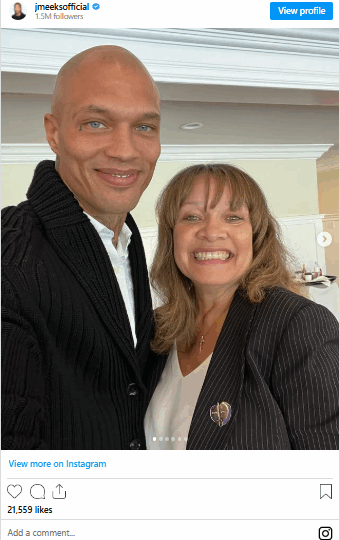
Building on his fame, Meeks launched his own clothing line, moving from model to entrepreneur. Backed by a reported $15 million deal with Fashion Concept GmbH, his brand symbolized not only personal success but the possibility of second chances. The man once labeled a criminal had now become a businessman with global influence.
In 2024, he took yet another step by releasing his memoir, Model Citizen: The Book of Jeremy Meeks. In it, he opened up about his past with unfiltered vulnerability—his childhood trauma, his time in prison, and the painful but powerful process of transformation. “I want to share my story, the whole story,” he said. “I hope people can connect with it because I’m in a place where I can finally be vulnerable.”
Away from the spotlight, Jeremy is also a devoted father. He has two sons—Jeremy Jr., from his previous marriage to Melissa, and Jayden, whose mother is Chloe Green, the daughter of Topshop’s founder. His relationship with Chloe was heavily covered in the media, but beyond the headlines, Meeks has always emphasized one thing: fatherhood matters most. He wants to be a role model to his children, to prove that people can change, and that your past doesn’t define your future.
In a 2024 interview with People magazine, Meeks shared that he was single and focusing on personal growth. “I’m not dating right now,” he said. “I’m trying to focus on myself.” It was a simple statement but one that reflected how far he had come—from chaos to clarity, from instability to purpose.
Jeremy Meeks’ story is more than a tale of unexpected fame; it’s a story of redemption, resilience, and reinvention. It reminds us that even those who stumble can rise again if given the chance. He went from a jail cell in Stockton to the bright lights of Paris Fashion Week, proving that transformation is not just possible—it’s powerful.
His journey challenges society’s ideas about who deserves a second chance. It’s a story that speaks to the heart, especially for anyone who has ever faced judgment or hardship. In Meeks, people see more than a model or celebrity; they see hope—a reminder that no matter how dark the beginning, it’s never too late to write a new ending.